
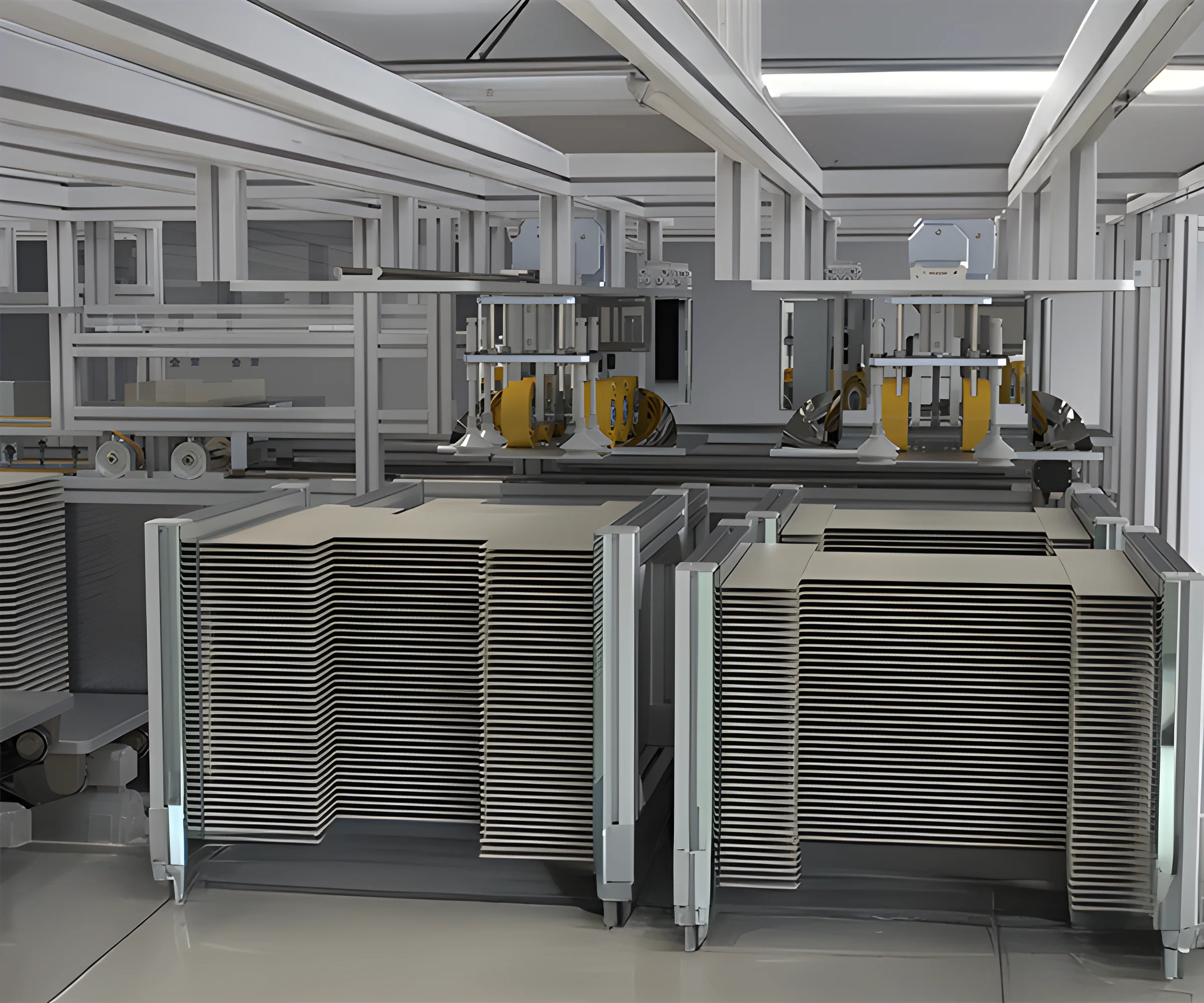
Fulfillment Packaging Machine
Multi-size box handling, dual-stage forming, integrated check-weigh and labeling. Up to 14 boxes/min.
Fulfillment lines lose minutes to box-size changes.
Operators hand-pick boxes from a wall of cardboard, reseal mis-sized packages, and stop the line every time the SKU mix shifts. The brief: one machine that handles four box sizes at once, forms the carton, accepts product from a human or a robotic arm, then weighs, labels, and dispatches — without an operator size-change.
A dual-stage cell with software-selected sizing.
Rockwell Studio 5000 at the controller, FactoryTalk View on the HMI, Yaskawa MotionWorks on the box-handling axes. Four preloaded magazines feed a two-stage forming station — inner box for loading, outer for protection, both per cycle. An inline check-weigher gates each carton before the label printer commits the shipping label. Pre-wired for an optional robotic loading arm.
Inside the machine
A walk through the installed machine, captured during commissioning — infeed magazines to outbound dispatch, with a stop at every stage that matters.
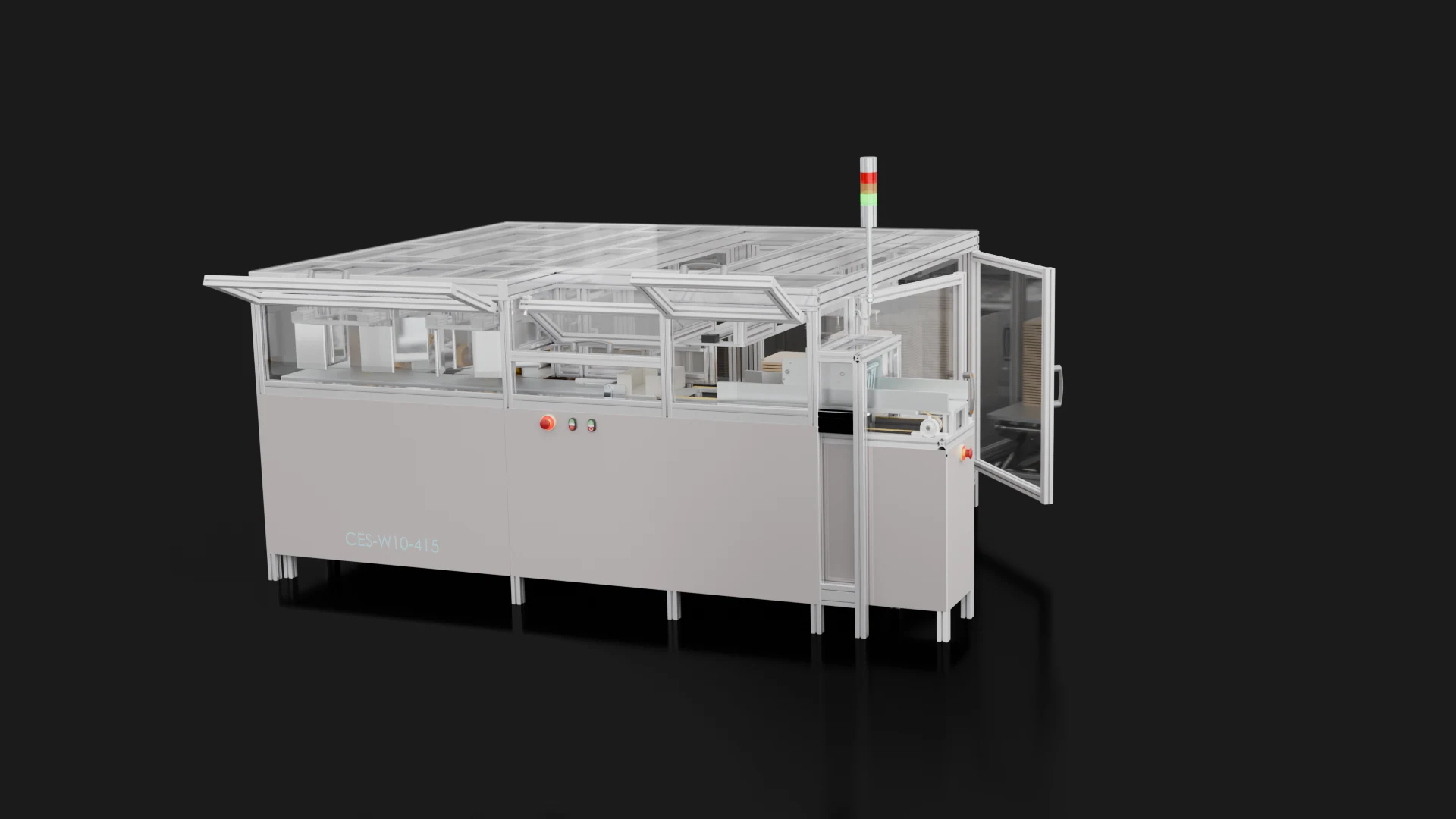
The machine, as designed
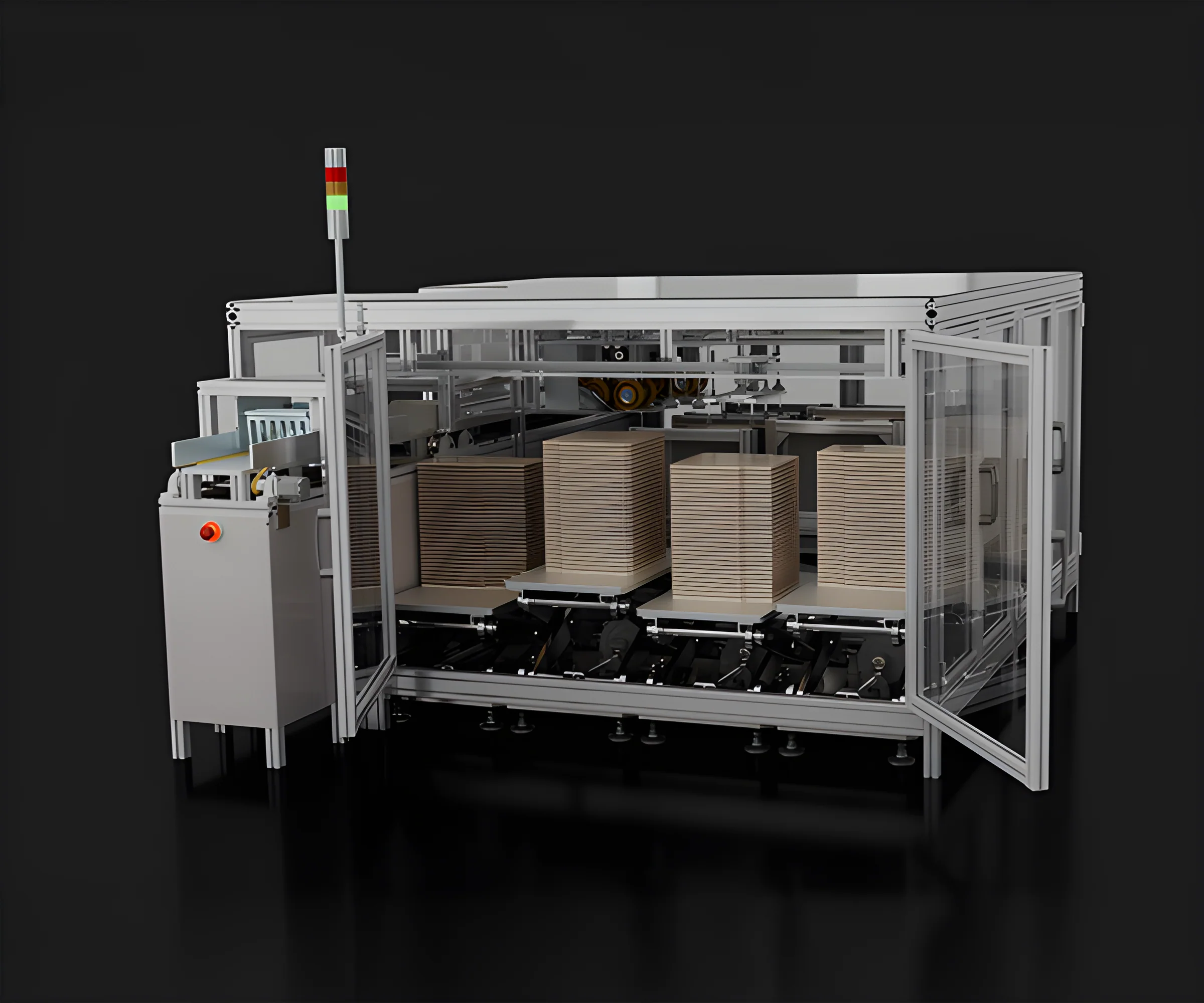
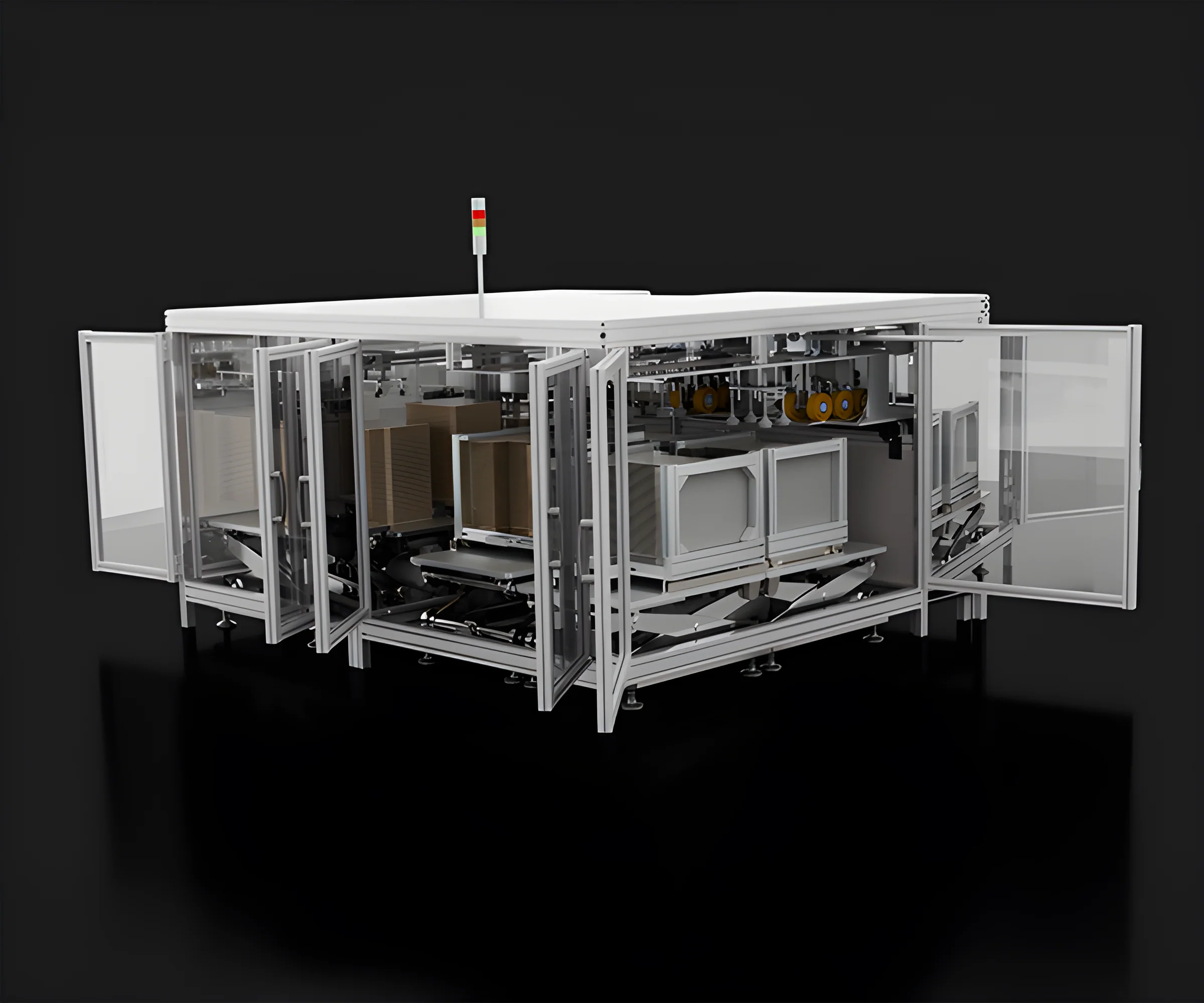
Footprint and access engineered to fit a standard fulfillment lane with a single operator at center. White-on-black studio render — the spec before metal was cut.
Walk the line
Full system walkthrough — magazines through dispatch, captured during prototype trials.
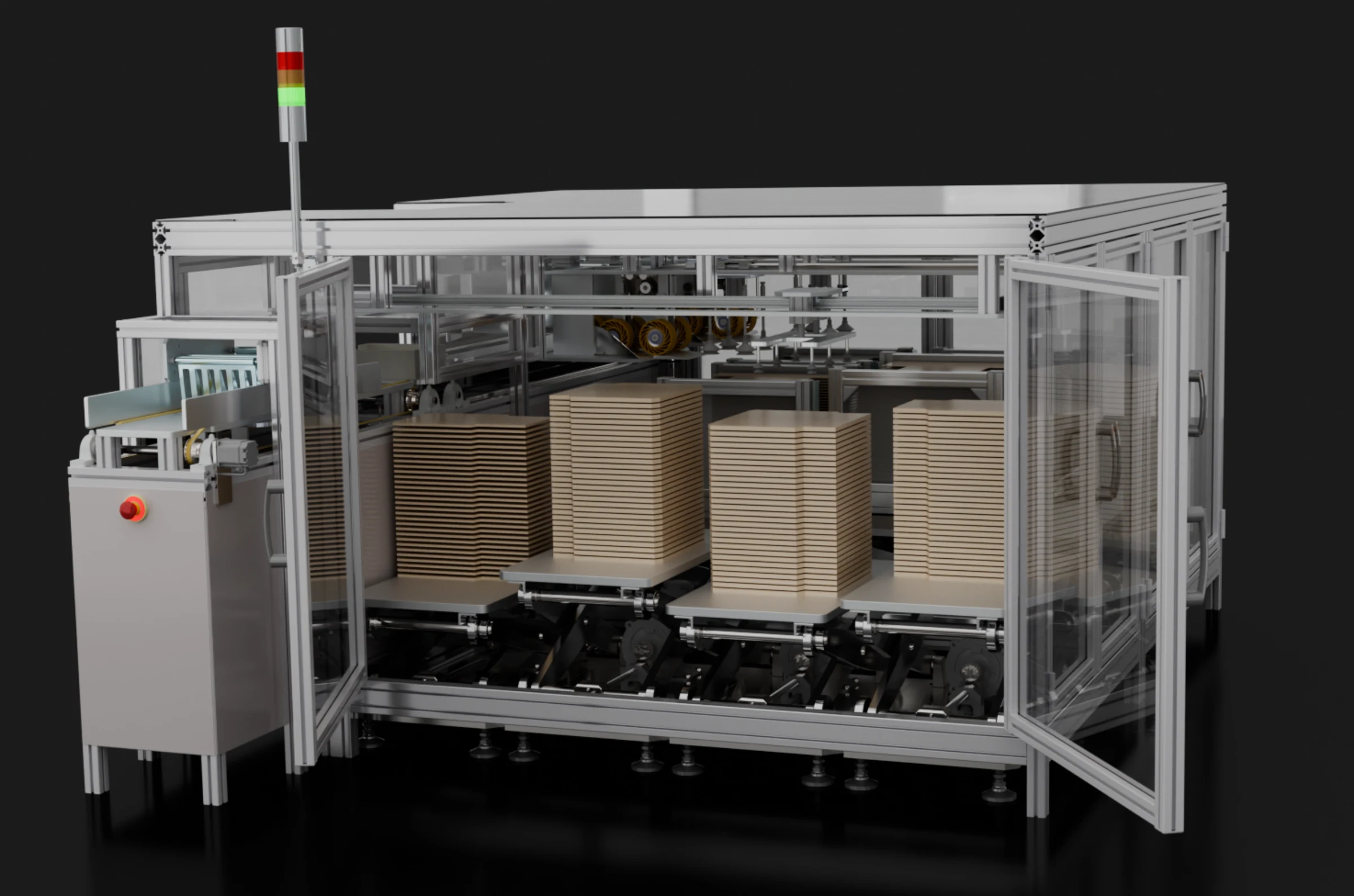
Four magazines, designed in
Four box-magazine bays integrated into the frame. Size selection is software-driven — an SKU mix change never stops the line for a mechanical swap.
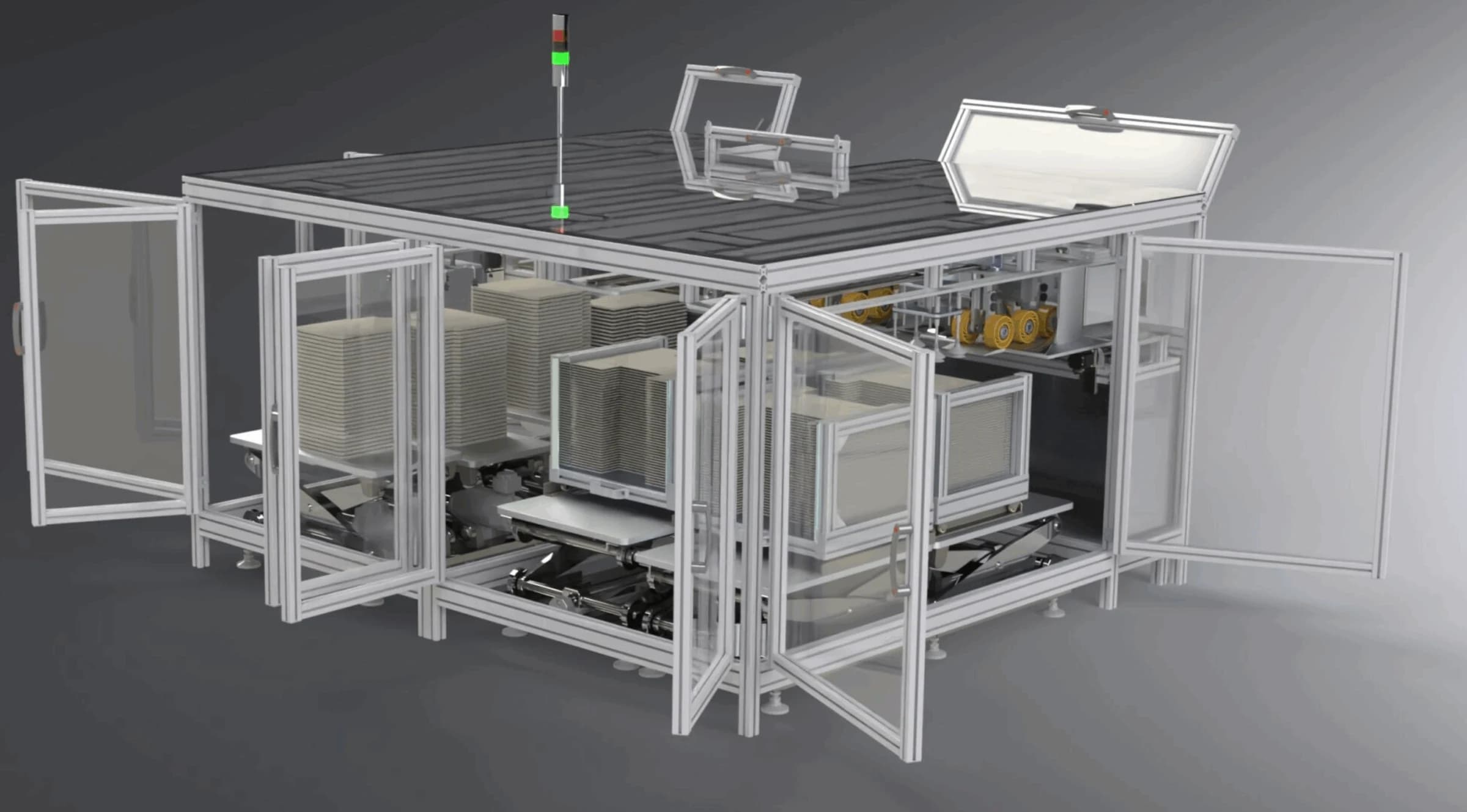
Two stages, one cycle
Inner carton prepared for loading at stage one. Outer carton receives the inner at stage two for shipping protection. Both stages run inside one machine cycle.
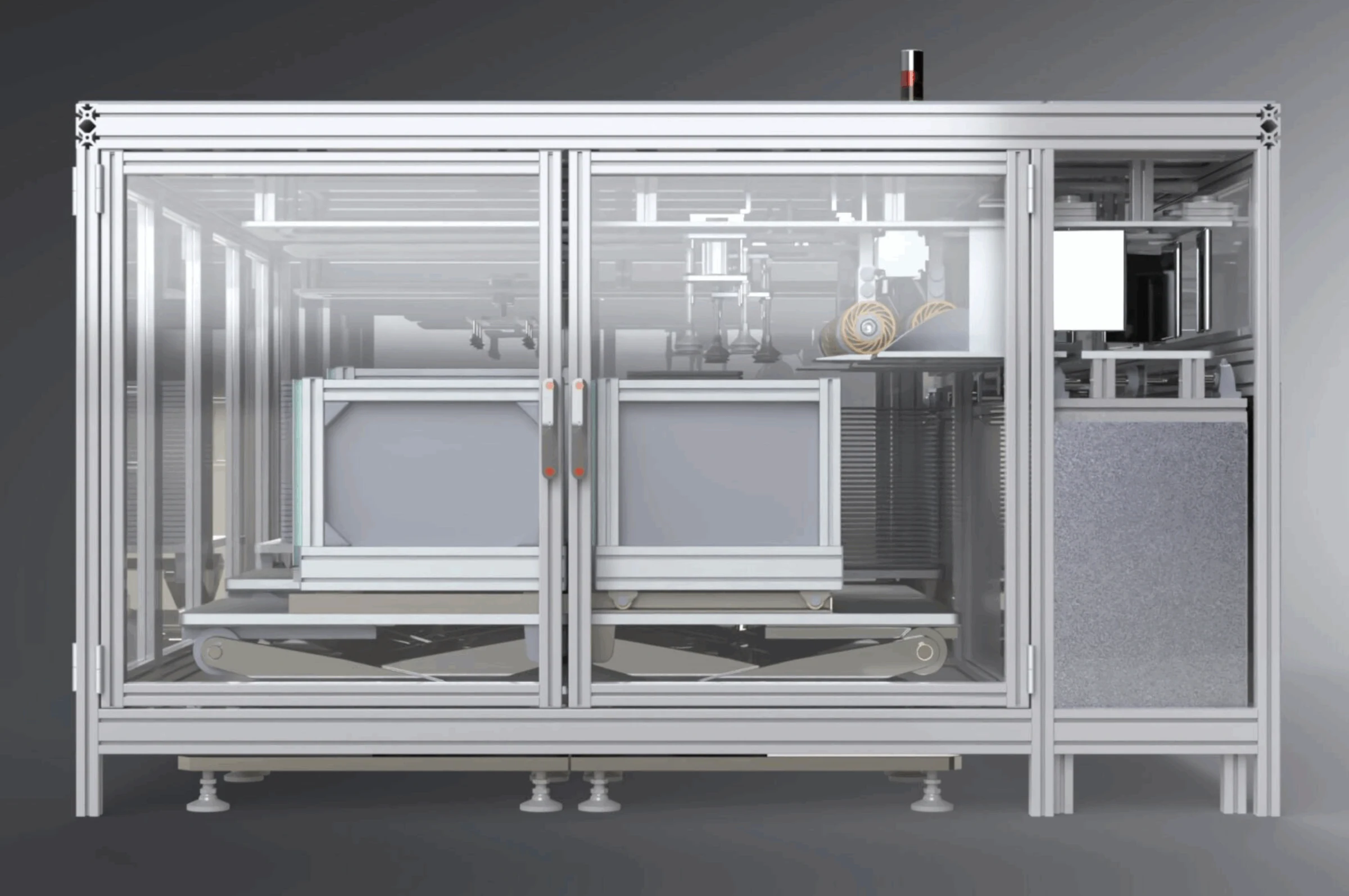
Built around access
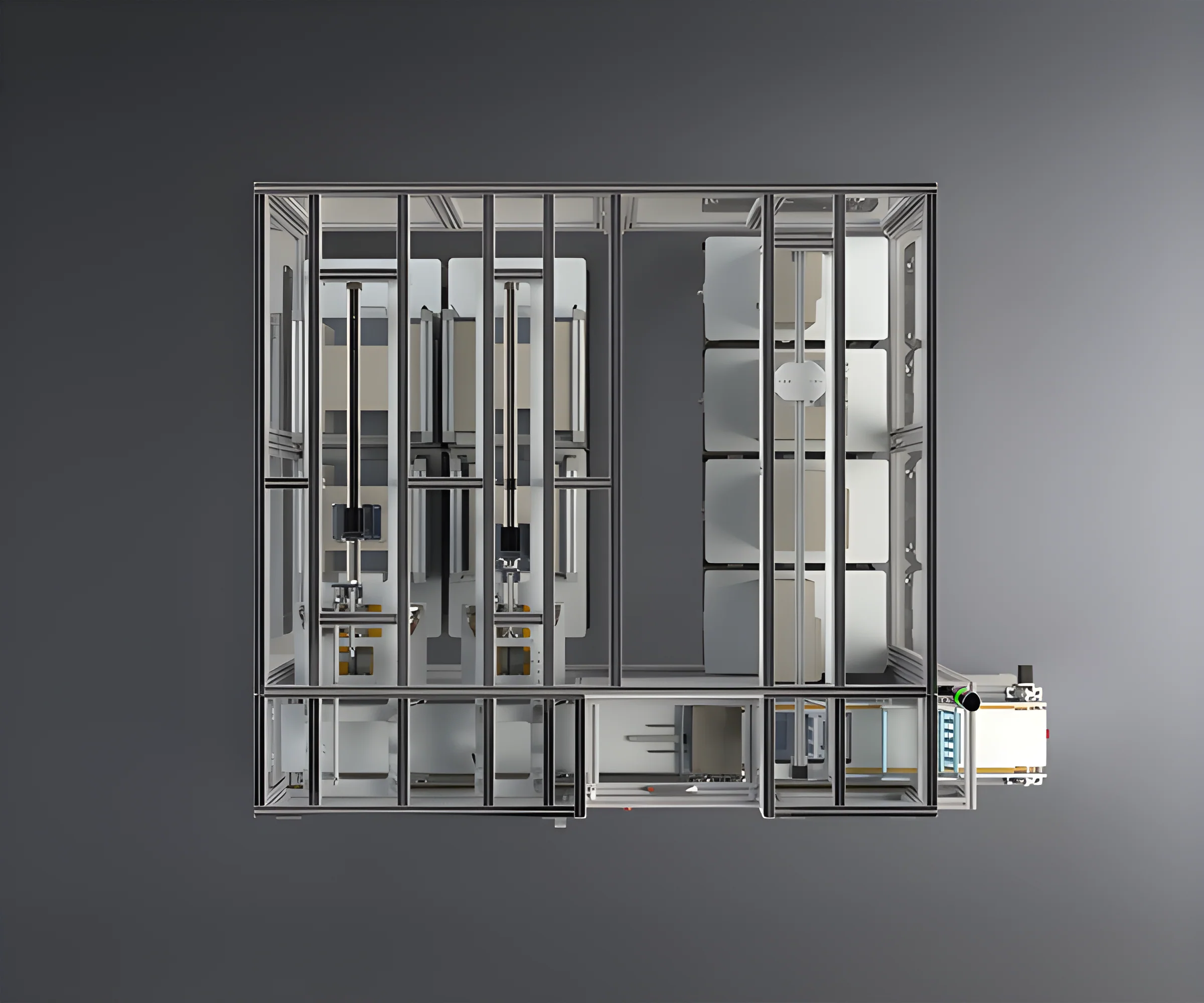
Side elevation showing the modular service-friendly frame. Standard fasteners and accessible panels — maintenance time engineered against from the first sketch.
The complete cell
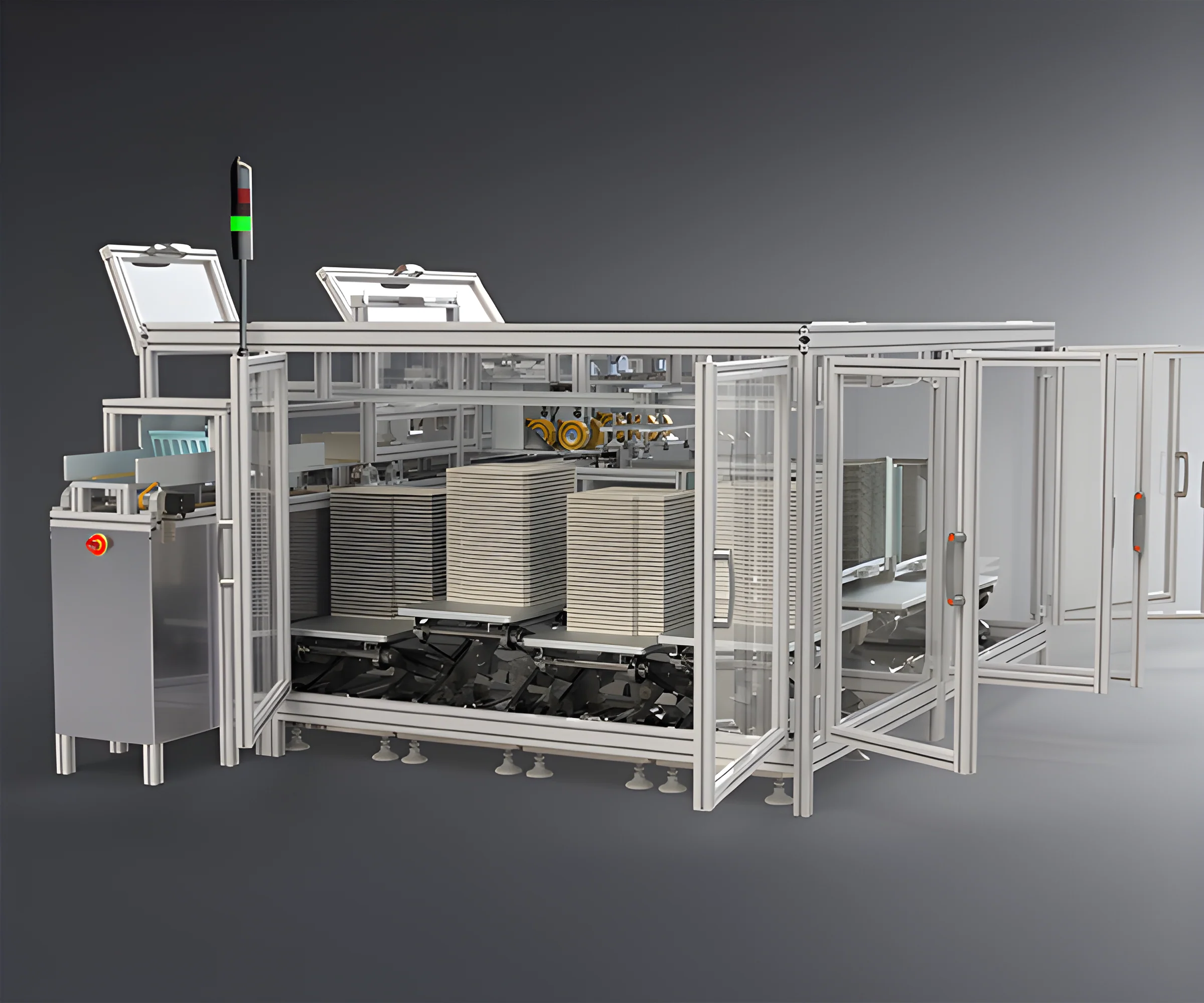
End-to-end view of the installed machine — from infeed magazines through dispatch. The footprint fits a standard fulfillment lane and the layout was designed for single-operator coverage.
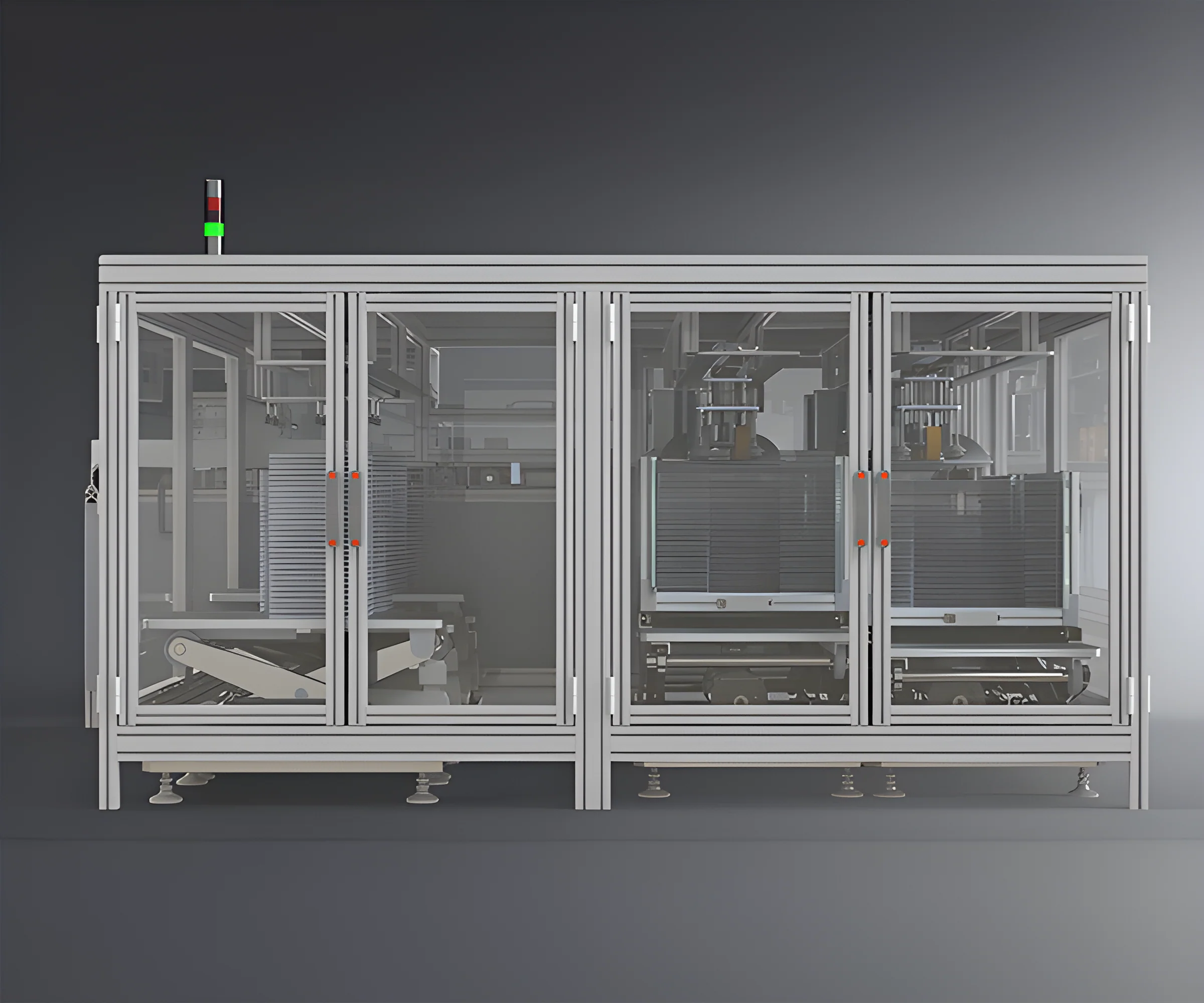
Magazines, installed
Four preloaded magazines feed the line on demand. Size selection happens in software, so an SKU mix change does not stop production for an operator to swap magazines.
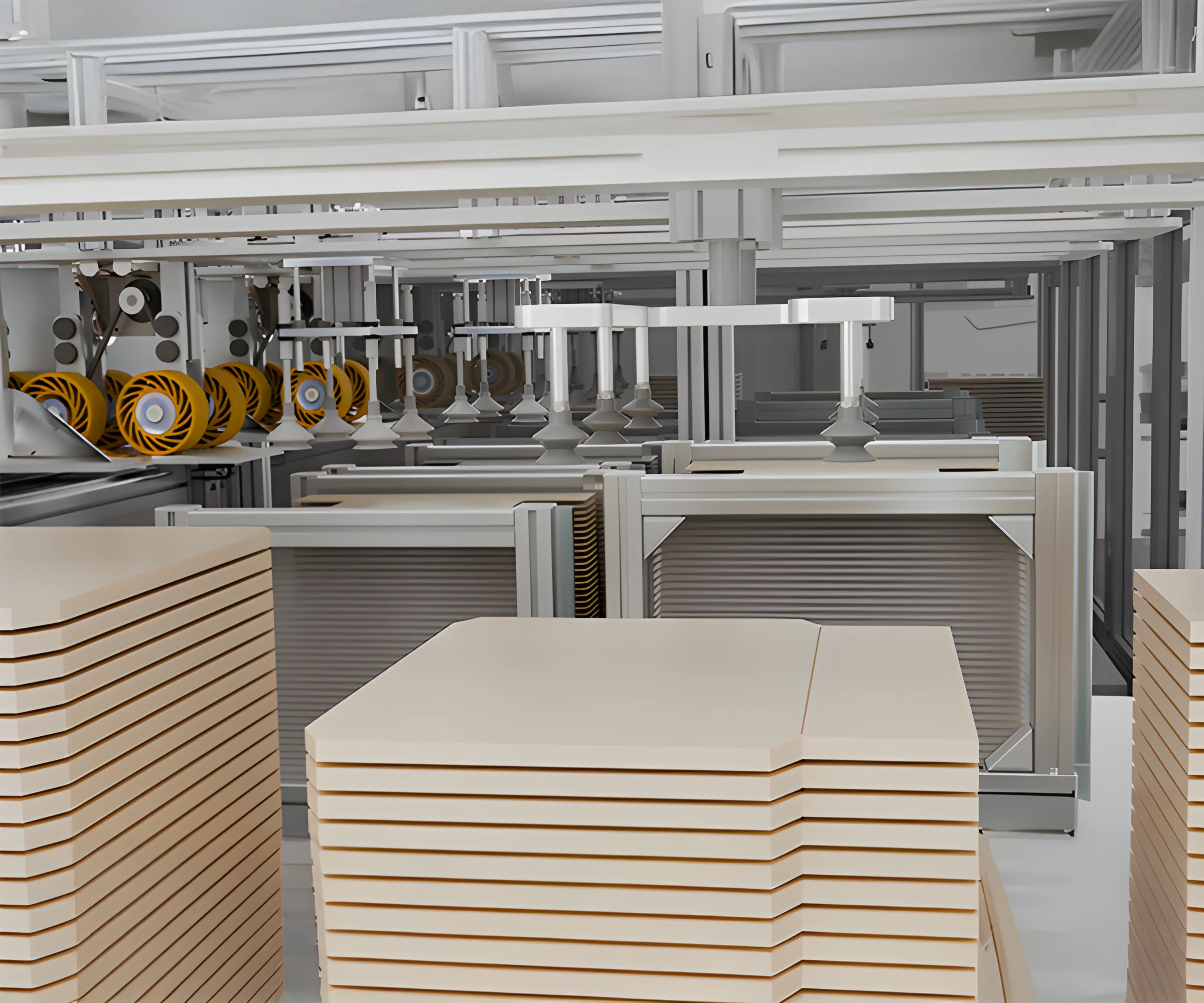
Dual-stage forming
Stage one preps the inner box for loading. Stage two seats the loaded inner into a matched outer carton for shipping protection — both stages run inside one machine cycle.
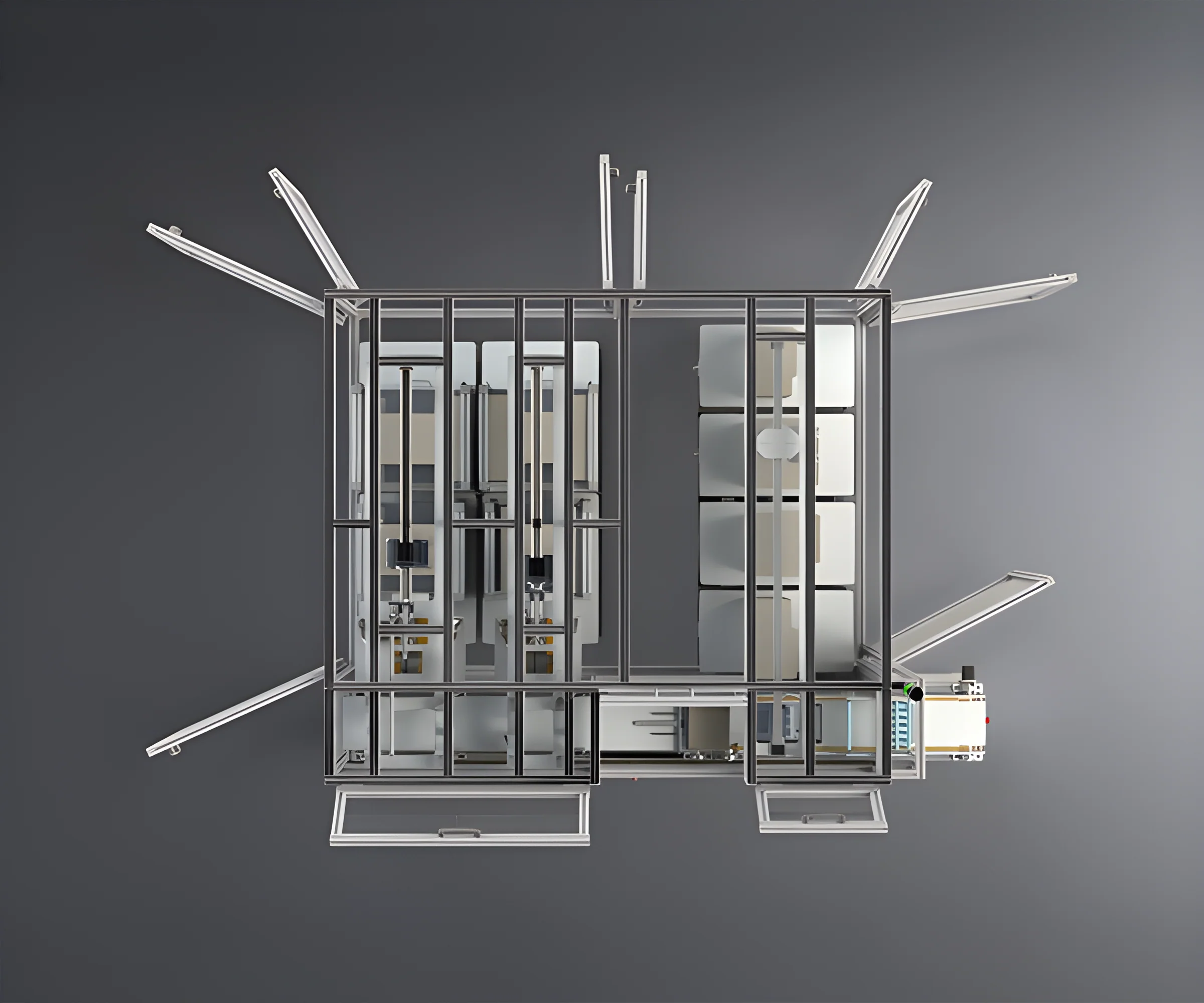
One screen, the whole line
Live throughput, fault history, magazine state, and dispatch counts on a single FactoryTalk View HMI. Trained on the first shift, run by the second.
Inline check-weigh
Every carton weighed before dispatch. Out-of-spec packages reject automatically into a sort lane — no manual quality gate slowing the line down.
Labeled, ready to ship
Integrated shipping-label printer applies the carrier label on the move. Cartons reach the dispatch belt in shipping-grade condition — no second handling, no rework.
Robotic loading, optional
The cell is wired to accept a robotic loading arm. With the loader in place the machine runs autonomously — operator presence is only needed for shift change and material replenishment.
Built to be maintained
Modular frame, accessible service panels, standard fasteners. The silent cost of automation is maintenance time — this machine was engineered against that cost from the first sketch.
Pharmaceutical Line Integration
Regulated environment integration. Validated documentation, electronic batch records, line clearance discipline.